← Back to Blog
How to Make UGC Ads with AI — No Camera, No Casting Calls
July 10, 2026 · CraftStory Team
UGC ads — the ones that look like a real person talking into their phone camera — are the workhorse of paid social right now. They feel native, they get watched, and brands pay creators $60–150 per video for them. The catch: you need a lot of them, because most ads die fast and winners come from testing dozens of hooks.
That’s exactly the problem AI solves. This guide shows the full workflow: how to write hooks, generate the presenter, and ship 10 ad variants in an afternoon — without a camera, casting calls, or reshoots. If you want the short version, the AI UGC generator page covers the tool itself.
What is a UGC ad (and why brands pay for them)?
UGC stands for user-generated content. A UGC ad imitates that style on purpose: a person facing the camera, casual delivery, captions, vertical video. It works because it doesn’t look like an ad — it looks like a recommendation from someone real. On TikTok, Reels and Shorts, native-looking video consistently out-performs polished studio creative.
Why make UGC ads with AI?
- Cost. A creator charges $60–150 per video. AI generates a video for a fraction of that — and re-generating a new hook costs minutes, not another invoice.
- Volume. Winning ads are found, not written. AI makes testing 10 hooks per product economically sane.
- Consistency. The same presenter, tone and framing in every variant — so you’re testing the hook, not the person.
- Languages. The same ad in 30+ languages with native-sounding speech — no re-casting for each market.
What you need
- A product and one insight. What problem does it solve, in one sentence a stranger would understand?
- A 30–45 second script. Template below — steal it.
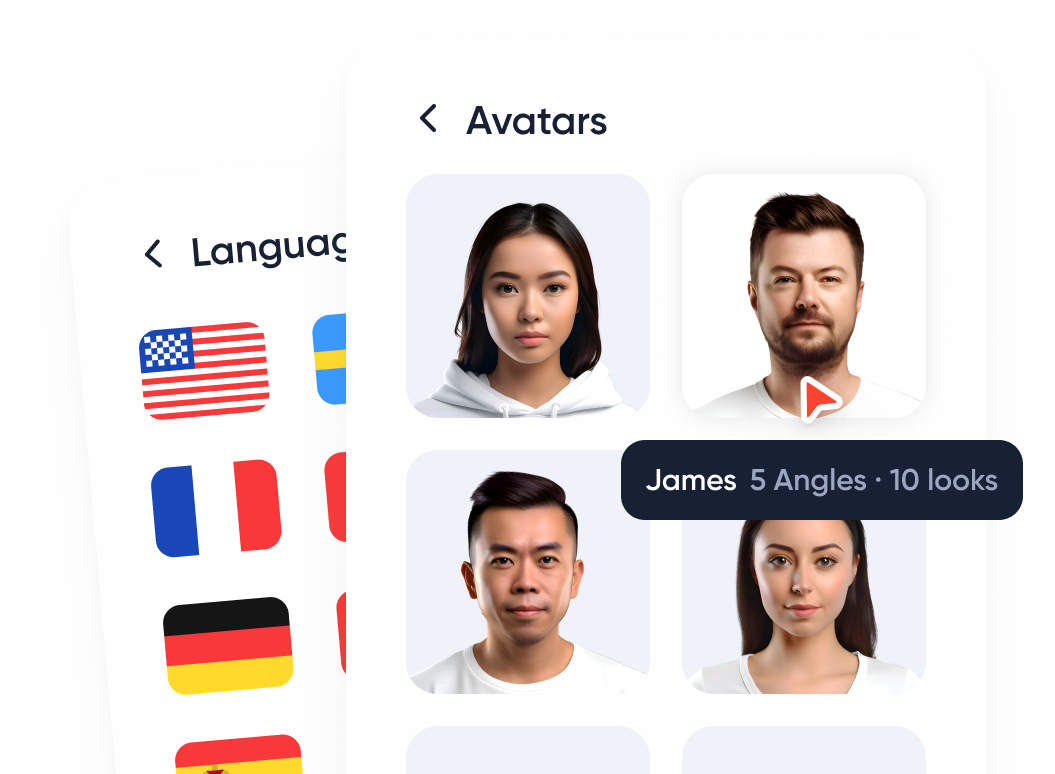
- A presenter. Pick one of 100+ AI actors, train a custom avatar of yourself from ~15 seconds of video, or make any photo speak as a talking photo.
- An account. Start free at app.craftstory.com.
How to make a UGC ad with AI in 5 steps
Step 1 — Write the hook first. The first 2 seconds decide everything. Write 5–10 hooks per product (formulas below), then attach the same body script to each. The hook is the variable you’re testing; the rest is the constant.
Step 2 — Pick the presenter. In CraftStory, choose an AI actor that matches your audience — or use your own avatar so every ad features you. One presenter across all variants keeps the test clean.
Step 3 — Generate the voice. Paste the script and pick a voice (or clone your own). Keep it conversational — contractions, short sentences, no radio-announcer energy. That’s what makes it read as UGC and not as an ad.
Step 4 — Generate vertical video. Portrait 9:16 for TikTok/Reels/Shorts. CraftStory animates the presenter with natural gestures and lip-sync from your script — see text to video for how the script-to-clip flow works.
Step 5 — Test at volume, then scale the winner. Launch all hook variants with a small budget each. Kill the losers in 48–72 hours, put the budget behind the hook that holds attention, and generate the next batch of variations around it.
7 hook formulas that stop the scroll
- Call-out: “If you run a Shopify store, stop scrolling.”
- Confession: “I wasted $400 on UGC creators before I tried this.”
- Contrarian: “Everyone tells you to hire creators. Here’s why I stopped.”
- Result-first: “This one video cut our cost-per-click in half.”
- Question: “What if you could test 10 ad hooks before lunch?”
- POV: “POV: your ad creative is done and it’s 9am.”
- Number promise: “3 ad hooks that printed money this month — number 2 will surprise you.”
A 30-second UGC ad script template
- 0–2s — Hook: one of the formulas above.
- 2–8s — Problem: “Making ad creative used to eat my whole week — briefs, creators, waiting, reshoots.”
- 8–18s — Product: “Now I type a script, pick a presenter, and get a finished vertical video in minutes.”
- 18–25s — Proof / detail: “Same presenter in every test, 10 hooks a day, any language.”
- 25–30s — CTA: “Try it free — link below.”
AI UGC vs creator UGC
- Speed: minutes vs days-to-weeks per video.
- Cost per variant: cents-to-dollars vs $60–150.
- Iteration: change one line and re-generate vs booking a reshoot.
- When creators still win: unboxings, hands-on product demos and authentic personal stories — film those once, then let AI carry the hook-testing volume. The strongest accounts mix both.
Mistakes to avoid
- Polishing too much. If it looks like a TV ad, it dies. Keep captions, casual tone, vertical framing.
- Testing one video. One video is a coin flip; ten hooks is a strategy.
- Fake testimonials. Don’t present an AI presenter as a real customer — it’s against platform policies and it burns trust. Position it as a spokesperson, not a review.
- Ignoring disclosure rules. TikTok and Meta have synthetic-media policies — check the current rules for your ad category before scaling.
Comparing tools first? See how CraftStory stacks up against HeyGen and Synthesia — or go straight to the AI UGC generator.
Frequently asked questions
What does AI UGC ads mean?
AI UGC ads are creator-style video ads generated by artificial intelligence instead of being filmed by a real content creator. The AI turns a photo (or a licensed AI actor) plus a script into a talking video that looks organic in a TikTok or Reels feed — same format, no camera, no casting.
How to make AI UGC ads for free?
Sign up for CraftStory's free plan (no card required), pick an AI creator or upload a photo, paste one of the hook formulas from this guide, and generate. The free credits are enough to test a few hooks before you spend anything — then scale the winners on a paid plan.
Are UGC ads legal?
Yes. Running AI-generated UGC-style ads is legal as long as you use faces you have rights to (CraftStory's AI actors are licensed for commercial use), don't impersonate real people, and follow platform rules — TikTok and Meta require labeling AI-generated content, and the FTC requires honest claims like in any ad.
How much does it cost to make UGC ads with AI?
You can start free: CraftStory's free plan includes 100 starter credits, about 8 minutes of AI Actor video. Paid plans start at $19/mo. For comparison, a single UGC video from a human creator typically costs $60–150 — and you still wait days for delivery.
Do AI UGC ads actually convert?
The winners come from volume, not from a single perfect video. AI lets you test 5–10 hooks per product for the price of one creator video, find the hook that stops the scroll, and then scale it. Keep the style native — casual tone, captions, vertical format.
Can I use my own face in AI UGC ads?
Yes. Record about 15 seconds of video and CraftStory trains a reusable custom avatar of you, or make any picture speak as a talking photo. You can also pick from 100+ ready AI actors.
Do I need to disclose that the ad is AI-generated?
Platform rules differ and keep evolving — TikTok and Meta both have synthetic-media policies, and some ad categories require explicit AI disclosure. Check the current policy of the platform you run ads on, and never present an AI presenter as a real customer giving a testimonial.
What length works best for UGC ads?
15–45 seconds. The hook has to land in the first 2 seconds — that's what decides whether the viewer stays. One idea per video; end with a single clear call to action.
Portrait or landscape?
Portrait (9:16) for TikTok, Reels and Shorts — that's where UGC ads live. CraftStory generates vertical natively, so nothing gets cropped.
Related guide: How to start a faceless TikTok channel with an AI avatar.
Ship your first AI UGC ad today — free. Try CraftStory — pick an actor, paste a script, get a vertical ad in minutes. See pricing for plans.
Ship your first AI UGC ad today — free. Try CraftStory — pick an actor, paste a script, get a vertical ad in minutes. See pricing for plans.